Every week, Rinchem shares important articles and topics about chemical and gas logistics, industries we operate in, and the general global supply chain. In this week's review we discuss liquid cooling technology, national freight dashboard, and gas prices.
Keep reading to see this week's hot topics.
This week's stats
54 million- tons of freight moved in the U.S. each day Yahoo
42%- Percentage of small businesses influenced by tariffs UC News

Liquid cooling technology for semiconductor chips is 10 times more efficient than previous record
The article highlights a new liquid-cooling technology developed to address one of the semiconductor industry's biggest challenges: managing the extreme heat generated by advanced AI and high-performance computing chips. Instead of relying solely on traditional air cooling or external cold plates, the technology circulates liquid much closer to—or directly within—the chip structure, allowing heat to be removed more efficiently at its source. Researchers say this approach could enable future generations of semiconductors to operate at higher performance levels while reducing the energy consumed by cooling systems, a growing concern as AI workloads drive power densities higher in both chips and data centers. The development represents a significant step toward overcoming thermal limitations that increasingly constrain semiconductor performance and packaging innovation.

DOT Proposes National Freight Visibility Dashboard to Speed Cargo Flow, Cut Bottlenecks
The article discusses a U.S. Department of Transportation proposal to create a national freight visibility framework that would improve real-time data sharing across the supply chain. The initiative aims to connect ports, trucking companies, railroads, ocean carriers, warehouses, and retailers through a common digital infrastructure, giving stakeholders greater visibility into freight movements and potential disruptions. By breaking down data silos and enabling secure, role-based access to logistics information, the DOT hopes to reduce bottlenecks, improve supply chain resilience, lower transportation costs, and help businesses respond more quickly to disruptions. The effort is part of a broader strategy to modernize the nation's freight network and support more efficient multimodal transportation.
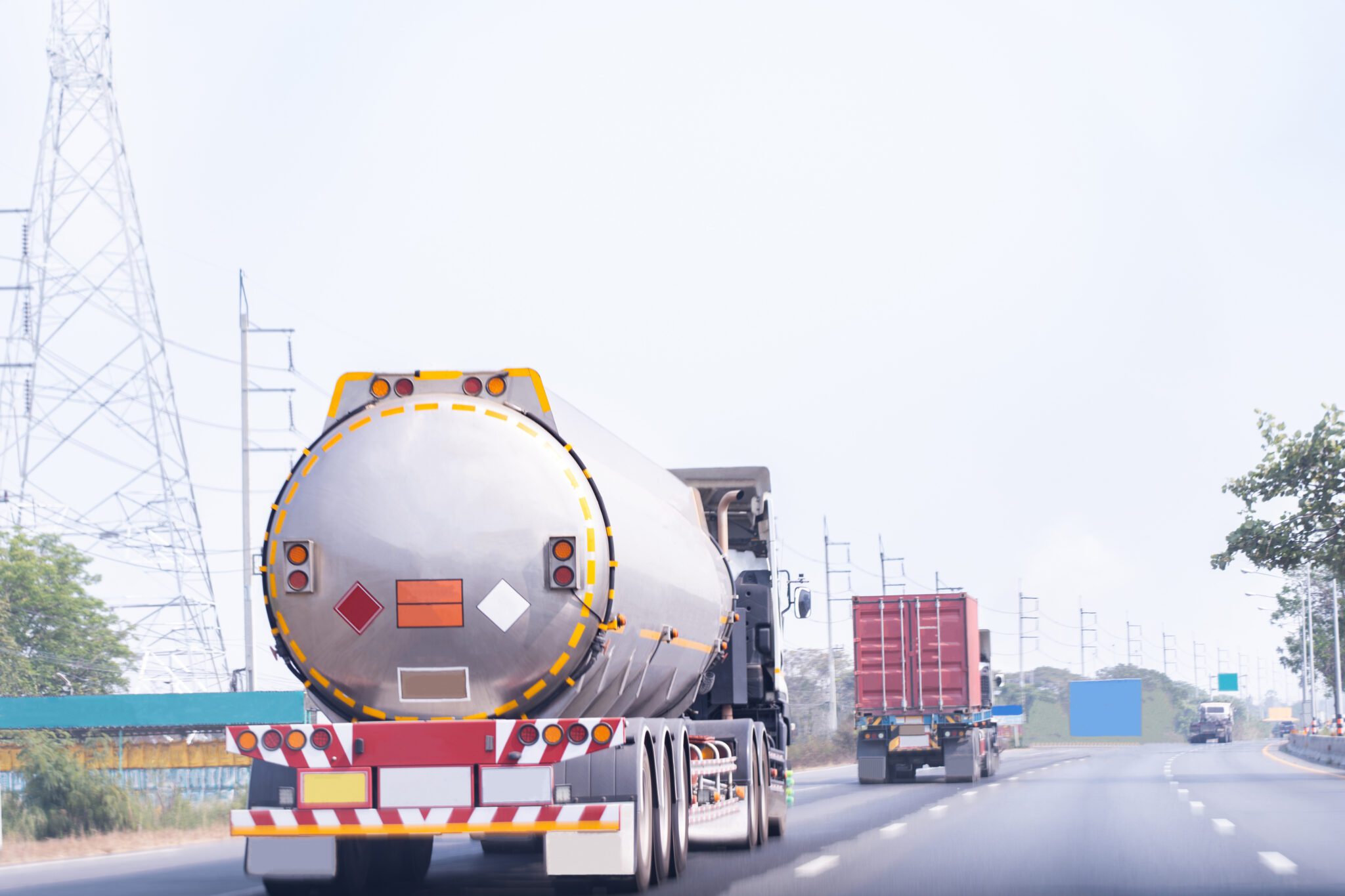
Yes, gas prices will be high this summer
The article argues that supply chain volatility will remain a defining challenge throughout 2026 as businesses continue to navigate geopolitical uncertainty, tariffs, shifting trade policies, labor constraints, and fluctuating consumer demand. University of Cincinnati supply chain experts note that the disruptions seen in recent years have fundamentally changed how organizations manage risk, forcing companies to prioritize resilience, supplier diversification, inventory visibility, and contingency planning rather than relying solely on efficiency-focused models. The article emphasizes that supply chain leaders must expect continued uncertainty and build more adaptable networks capable of responding quickly to changing economic and global conditions rather than assuming a return to pre-pandemic stability.
Get more articles like this in your inbox
Sign up for our monthly newsletter
Find more articles
Request a Quote