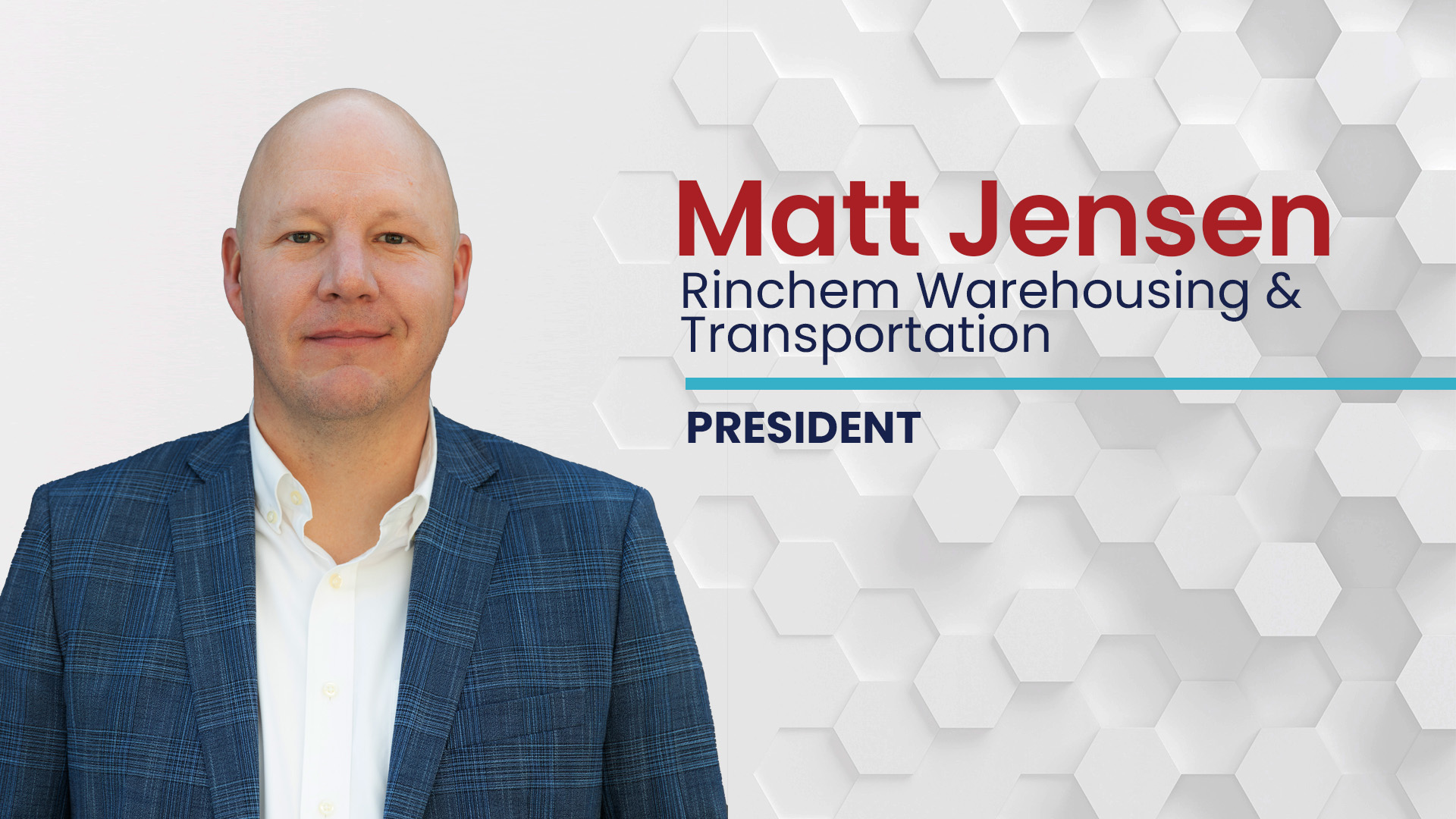
Author: Matt Jensen, President, Rinchem Warehousing and Transportation
From shifting tariff policies and export controls to geopolitical tensions and regional conflicts, companies are navigating an environment where sourcing strategies, transportation routes, and supplier relationships can change quickly. While these challenges impact nearly every industry, their effects are amplified for organizations managing regulated materials, including chemicals, gases, and other hazardous goods.
As supply chains continue to evolve, the implications for compliance, safety, and operational execution are becoming more complex and more critical to get right.
Key Takeaways
- Trade volatility is accelerating the shift from globally optimized supply chains to more regional, flexible networks
- Changes in sourcing and routing introduce new compliance risks for hazardous and regulated materials
- Regulatory expectations and enforcement are increasing, leaving less margin for error in documentation and classification
- Supplier diversification can expose gaps in regulatory maturity, packaging standards, and dangerous goods expertise
- Visibility beyond Tier 1 suppliers is becoming critical to managing risk across complex supply chains
- Logistics partners are being evaluated not just on cost and speed, but on their ability to deliver consistent compliance and control
- Trade volatility is no longer a temporary disruption - it’s becoming a defining feature of the global supply chain landscape.
A Shift from Global Efficiency to Regional Resilience
For decades, global supply chains were designed for efficiency - optimizing cost, speed, and scale across international networks. Today, that model is being rebalanced. Ongoing trade tensions, tariff uncertainty, and geopolitical risk are driving a shift toward:
- Regionalized sourcing and manufacturing strategies
- Supplier diversification across multiple geographies
- Increased buffer capacity and inventory positioning
Rather than relying on a single global network, companies are building more flexible, distributed supply chains designed to absorb disruption.
This shift is not about abandoning globalization entirely, it’s about reducing exposure to concentrated risk.
Why Regulated Supply Chains Face Greater Complexity
For companies handling regulated materials, these structural changes introduce an added layer of complexity. Unlike standard goods, hazardous materials require:
- Strict classification, labeling, and documentation
- Compliance with varying international, national, and local regulations
- Specialized handling, storage, and transportation protocols
When supply chains shift, whether through new suppliers, alternate ports, or different transportation modes - these requirements don’t simply carry over seamlessly. Instead, organizations must reassess:
- Regulatory requirements across new jurisdictions
- Packaging and labeling standards for different regions
- Carrier capabilities and certifications
- Facility readiness for compliant storage and handling
Even small changes in routing or sourcing can introduce compliance risks if not properly evaluated.
Increased Scrutiny and Enforcement
At the same time, regulatory oversight is not easing - it’s intensifying. Global authorities and carriers are placing greater emphasis on:
- Accurate dangerous goods declarations
- Proper classification and packaging
- End-to-end visibility and traceability
Emerging technologies, including AI-driven cargo screening and digital documentation tools, are enabling earlier detection of mis-declared or non-compliant shipments.
For shippers, this means there is less margin for error. Issues that may have previously gone unnoticed are now more likely to be identified before or during transit, resulting in rejected shipments, fines, or operational disruption.
What This Means for Supply Chain Strategy
In this environment, managing regulated materials requires more than operational execution, it requires strategic alignment between sourcing, compliance, and logistics. Organizations are increasingly focusing on:
- Upstream visibility: Understanding not just Tier 1 suppliers, but deeper into the supply chain
- Standardization: Creating consistent processes across regions to reduce variability
- Partner selection: Working with logistics providers that have proven expertise in regulated materials
- Scenario planning: Evaluating how changes in trade policy or geopolitical conditions could impact operations
The goal is not to eliminate volatility, it’s to build supply chains that can adapt to it without compromising safety or compliance.
A More Integrated Approach to Risk
Trade volatility has made one thing clear: supply chain risk is no longer confined to a single function.
Procurement decisions, transportation strategies, regulatory compliance, and operational execution are now tightly interconnected, especially for hazardous materials. Organizations that succeed in this environment will be those that:
- Break down silos between teams
- Integrate compliance into early-stage decision-making
- Prioritize visibility and communication across their networks
For regulated supply chains, resilience is not just about redundancy, it’s about control, clarity, and coordination.
RECAP: As global trade dynamics continue to evolve, supply chains will remain in a state of adjustment. For companies managing regulated materials, the stakes are higher and the margin for error is smaller. Adapting to this new environment requires more than reacting to disruption. It requires building systems, partnerships, and processes designed to navigate uncertainty from the start.
Sources:
Get more articles like this in your inbox
Sign up for our monthly newsletter
Find more articles
Request a Quote